
Your students and their families now have a portal
Introducing the student portal, a space where each family can follow their own lessons and invoices.Each family goes to portal.harnesscalendar.com and signs in with their email (a one-time code, no password to remember), then sees their student’s upcoming and past lessons in your studio’s timezone, along with your notes and attendance for the lessons you share.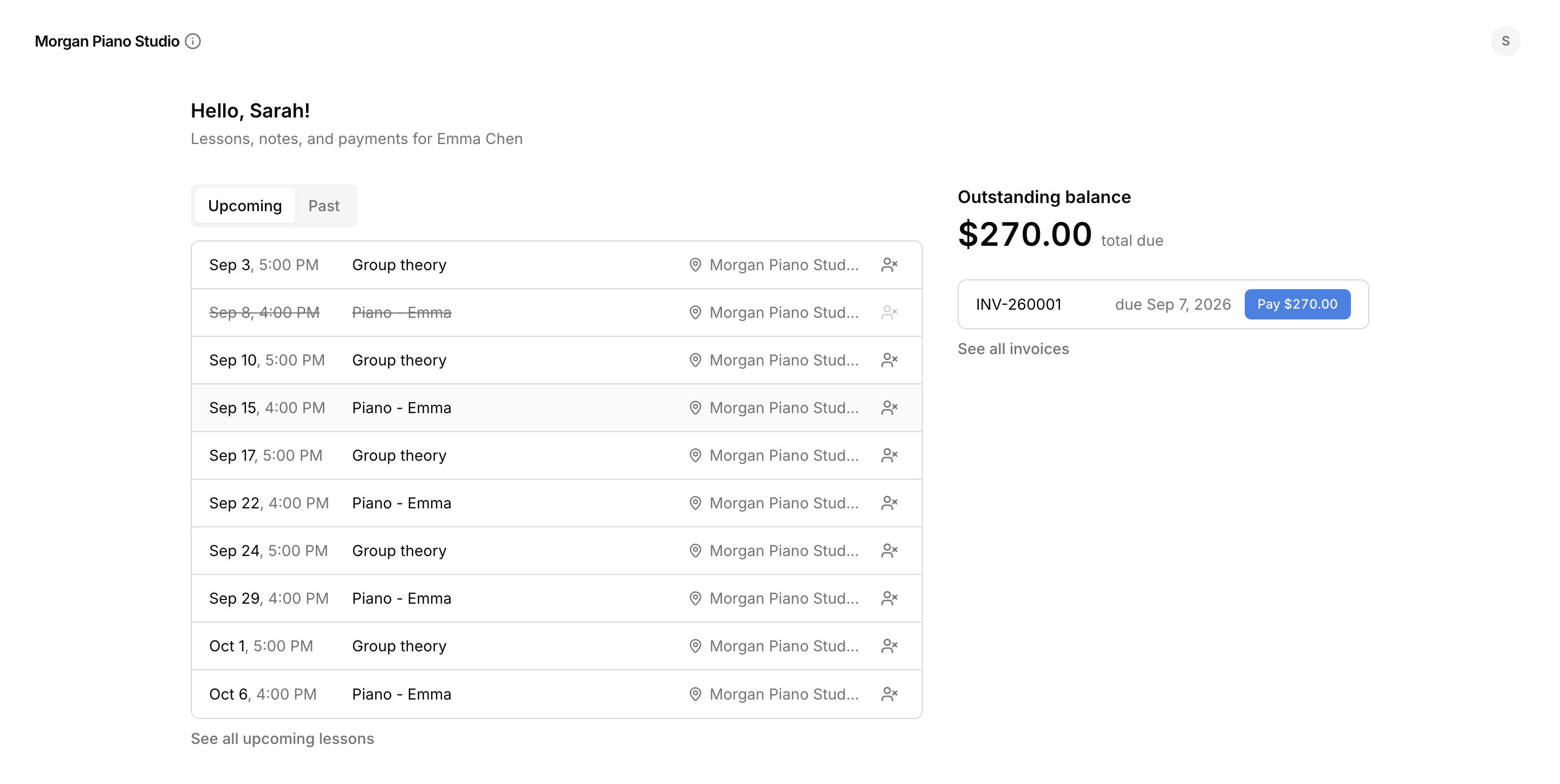
Their invoices, in one place
Families can see what they owe, open any invoice, and pay online where you’ve turned that on. No more “did you get my invoice?” threads.”Can’t make it”
A family can tell you ahead of time that a student will miss a lesson, with a reason if they want. If they give less notice than your late-cancellation window allows, the lesson is charged automatically on their next invoice, exactly as if you’d marked it yourself.You stay in control
You choose per contact who sees the schedule and who sees the details, so a co-parent and a grandparent can have different access. Send a portal invite when you add a contact, send it again anytime, and preview the portal exactly as a contact sees it before they log in.About this studio
A tap on your studio’s name shows families who you are, how to reach you, and your policies. They can install the portal as an app on their phone, too.Improved (2)
Improved (2)
- The emails Harness sends for you (invoices, reminders, lesson notes, and portal invites) have a cleaner, more consistent design.
- Pages across the app load faster, and no longer flash a loading screen before your content appears.
See every email you’ve sent, and whether it landed
Harness sends a lot of mail for you: invoices, reminders, lesson notes, schedule changes. Until now none of it left a trace you could check, so when a parent said the invoice never arrived, you had nothing to look at.Every student and account now has a Messages tab listing what was sent about them, newest first, with who received it and what became of it. Open any message to read it exactly as the recipient saw it. Mail sent before this update is listed too, though most of it can’t show its content.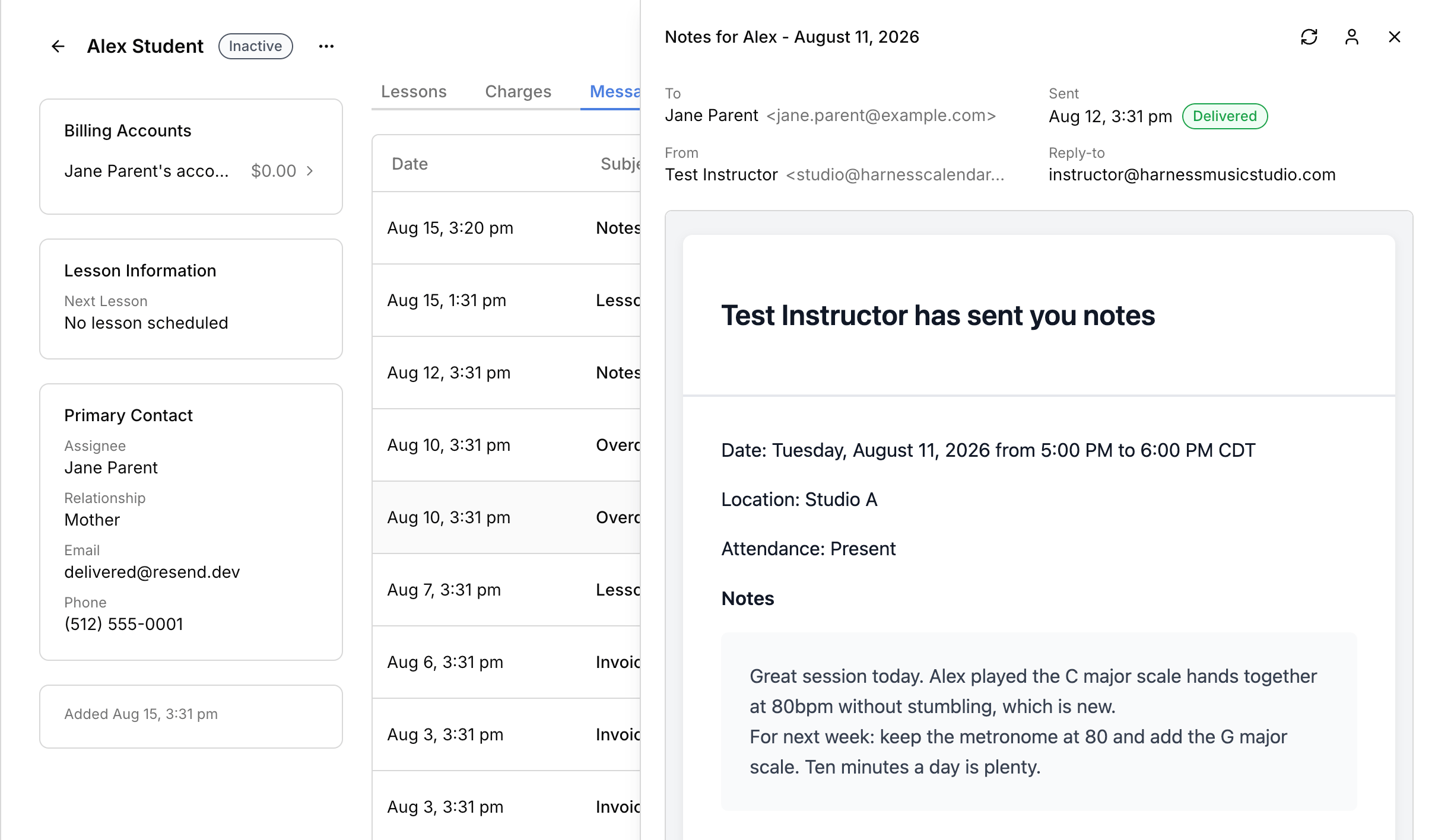
Each contact gets their own copy
An invoice to two parents is two separate emails now, so neither one sees the other’s address.When an address stops working, Harness tells you
A bounced or blocked address raises a warning on the student, the account, and the contact card that carries it, and it stays until mail reaches that address again. Fixing the address is usually all it takes, and the warning clears on its own.Send again, or try again
Delivered mail can be re-sent as an exact copy when someone says they never got it. Mail that failed gets Try again, which goes to the contact’s current address, so correcting a typo and proving the fix is two clicks. Resent copies are linked to the original, so you can always tell a resend from a second send.Improved (2)
Improved (2)
- Clicking a lesson in a student’s history opens a panel with the notes, attendance, and details in one place, and you can step through lessons without losing your spot in the list.
- Dates read shorter across the app: “Jul 11” for this year, with the year shown only when it isn’t.
Fixed (1)
Fixed (1)
- Copy buttons only confirm when the copy actually happened. A browser that refuses the copy now says so instead of showing “Copied”.
A more natural way to record and read your money
New add expense and add charge modals, and a transaction detail sheet that explains itself.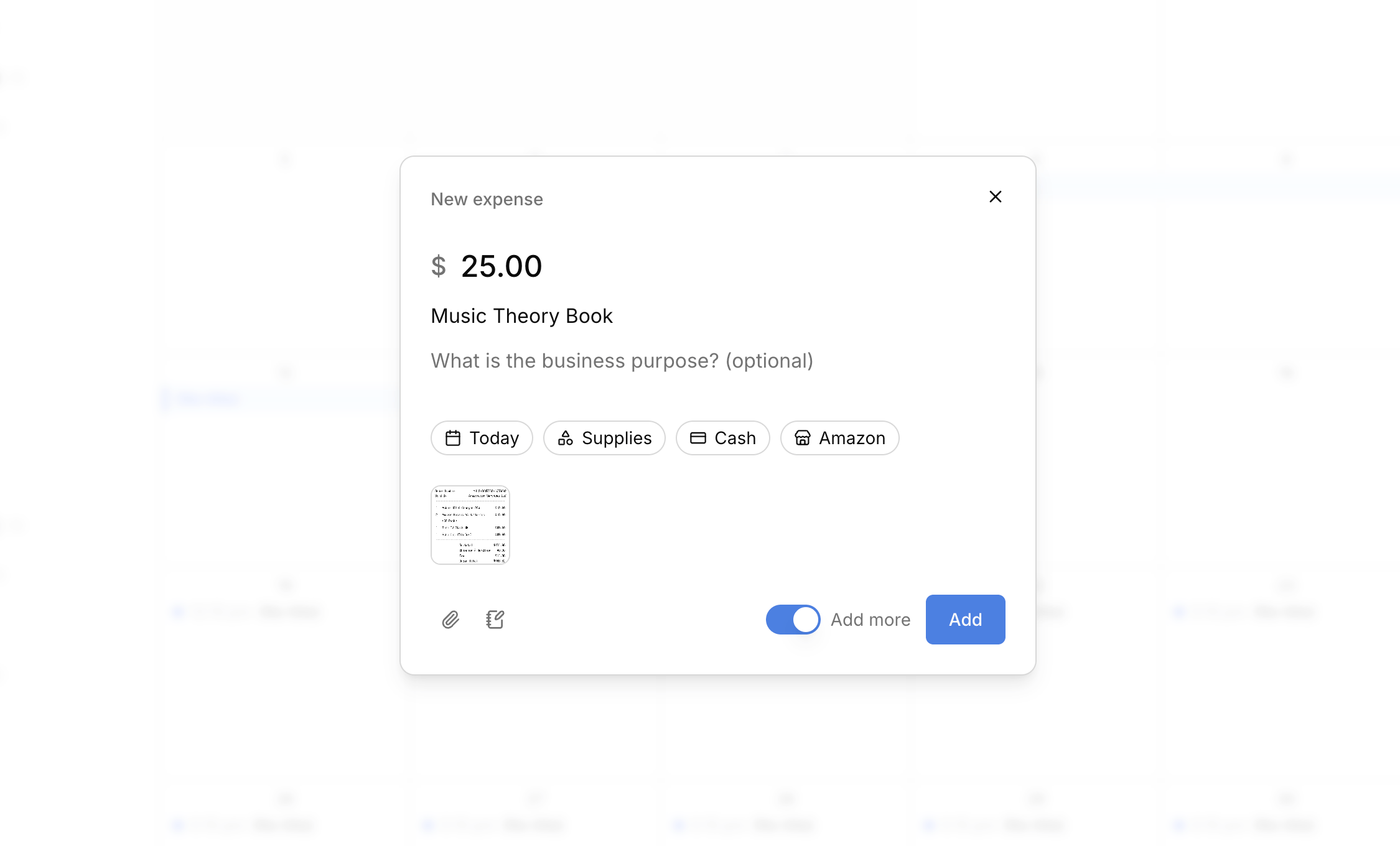
Recording an entry
The Add expense and Add charge modals lead with the money. Type the amount and what it was for. Everything else (date, category, method, vendor, account, who was there) sits below as pills you can move through quickly, already filled with sensible defaults.- Receipts. Drag a file anywhere onto the modal to attach it. Thumbnails appear as you go, and clicking one opens it full size.
- Add more. Keep the modal open after saving, so a stack of receipts is one sitting instead of one trip each.
- Charges show where they land. A line under the pills tells you which account gets billed, and when.
Reading an entry
Clicking a transaction opens a sheet shaped around what the entry is, not a single form that half-serves everything.- See the state first. What it is, what it’s worth, and where it stands lead the sheet.
- Follow the money. A charge, its invoice, and the payment that covered it are one click apart in either direction.
- Correct in place. Edit a field where you read it. Changes save as you make them.
- Detail when you want it. Receipts, tax fields, processing fees, and reference numbers are there without crowding the facts that matter.
Improved (5)
Improved (5)
- The filter, tab, and sort you set on a list are remembered, and the back button returns you to the view you were in.
- Enter saves from any modal with a text field. Where Enter belongs to the text itself, like a note or a picker, use Cmd+Enter (Ctrl+Enter on Windows).
- Modals take focus when they open, so screen readers announce them.
- Delete confirmations start on Cancel, so Enter can never confirm a deletion by accident.
- Void no longer appears on expenses, where it never meant anything. Delete is how you correct one.
Fixed (6)
Fixed (6)
- A pay link opened in two tabs can no longer take two payments for the same invoice, and it refreshes itself if the balance changed after you sent it.
- Your Profit & Loss no longer understates income after a refund.
- The fee Stripe charges for a dispute is recorded on every dispute, including the ones you win. It used to disappear from your books.
- A lost dispute records the money that was seized, so the loss lands somewhere instead of nowhere.
- A payment that lost a dispute can no longer be voided.
- Lesson times are correct for studios more than twelve hours from UTC, where an event could land on the wrong day.
Harness can now do your billing
Set up how you charge once, and Harness generates the charges, groups them into one invoice per account, and sends them on your schedule.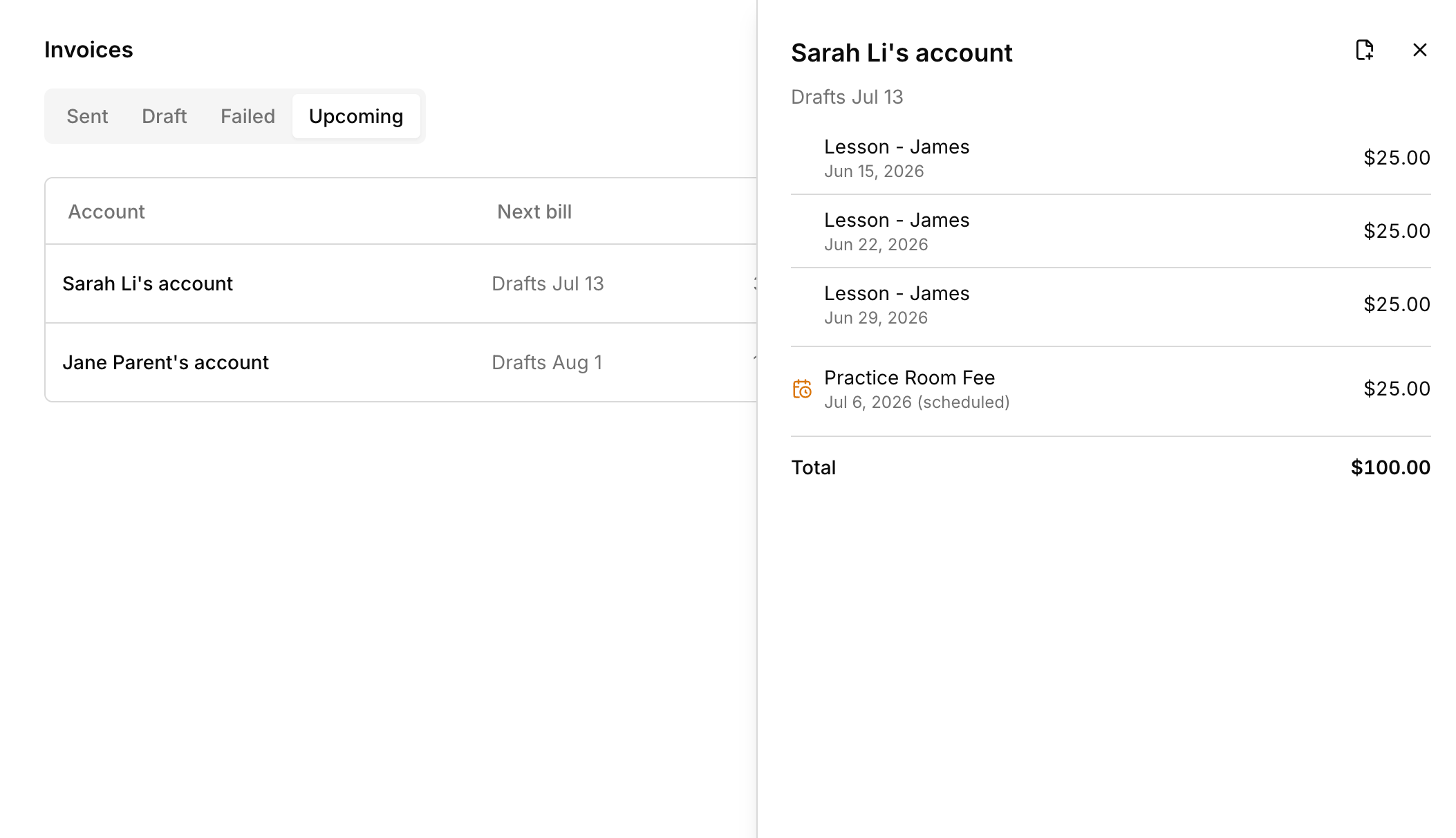
Set up how you charge
- Rate presets. Save your lesson prices once, then pick one when you set a lesson as paid.
- Recurring charges. Add standing fees to an account (monthly tuition, instrument rental, a term charge). Save your standard setup as a template and apply it to any account.
- Billing cycles. Each account bills daily, weekly, or monthly.
Charges create themselves
Mark attendance and the charge follows. Recurring charges appear each period on their own, and a one-off charge you add by hand simply rides the account’s next bill.One invoice per account
At each account’s cycle close, Harness gathers every ready charge into one grouped invoice per account. You choose the automation level:- Draft for review (the default): invoices assemble and wait in your Draft list for a glance before sending.
- Full auto: invoices assemble and send themselves, with a pay link when Stripe is connected.
- Manual: charges accrue and you invoice by hand, like before.
See the next bill before it goes out
The new Upcoming tab shows what each account’s next bill will contain and when it goes out, projected recurring charges included.Improved (6)
Improved (6)
- Students with no emailable contact and accounts with no billing recipient are flagged in lists and on their pages, next to where you fix them.
- Move a charge to a different account from its transaction details.
- Transaction details show which account a charge belongs to.
- Invoices assembled by Harness carry an Auto badge, and drafts with no recipient are flagged.
- New studios choose how often they bill during onboarding.
- A banner warns you if your subscription payment fails, so you can update your card before losing access.
Fixed (1)
Fixed (1)
- Recurring lesson times no longer shift when your computer’s timezone differs from your studio’s, or drift an hour across daylight saving.
See your calendar the way you work
New calendar views, a faster app, keyboard shortcuts, and a few smaller upgrades.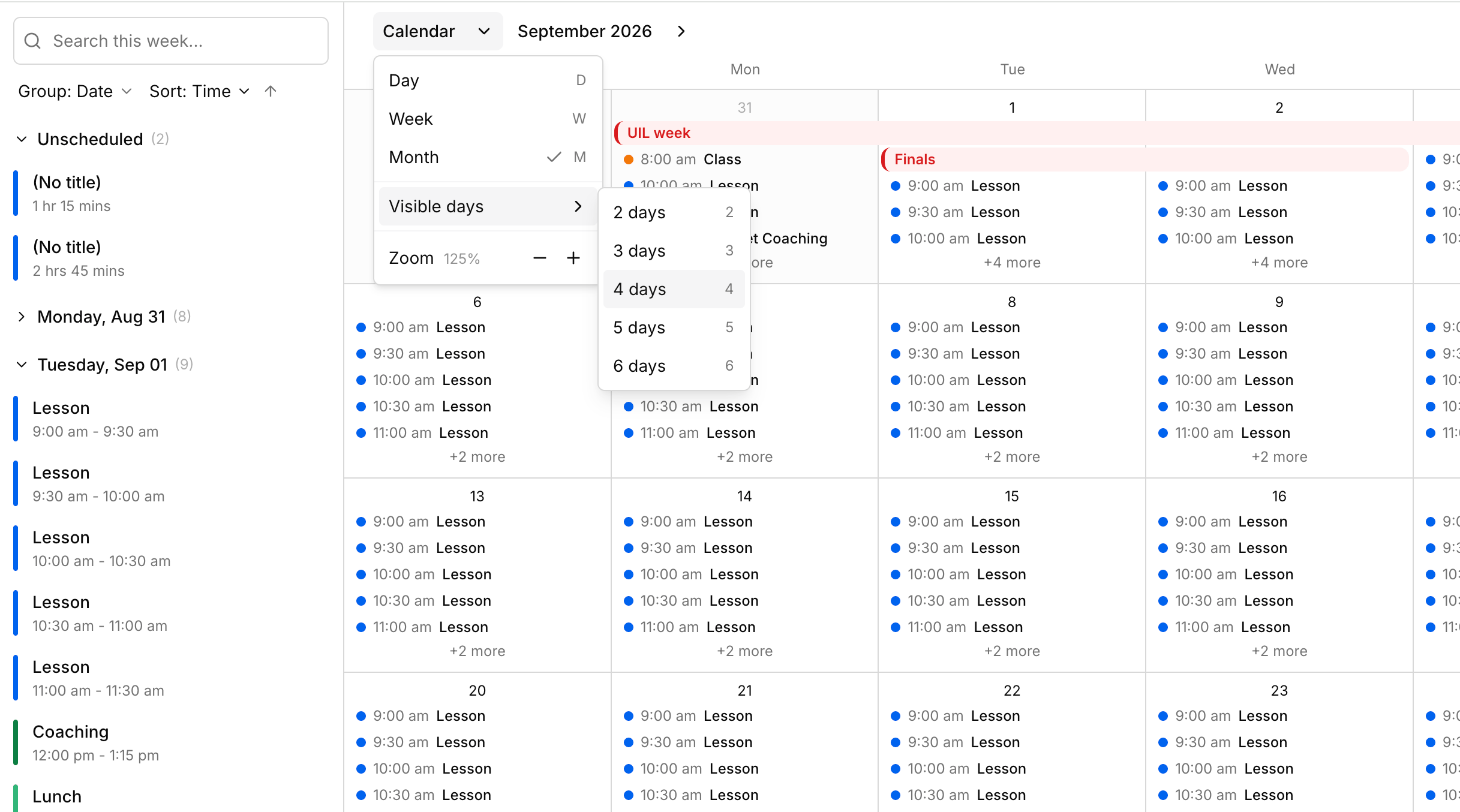
Calendar views
Your calendar can now show more than one fixed week.- Month view for scanning a whole month at a glance, so you can see where you’re packed and where there’s room.
- Day view for focusing on a single busy day.
- A custom range of 2 to 6 days, handy if you only teach a few days a week.
- In month view, drag a lesson to another day and it keeps its time, click a date to open that day, or drag across days to block out a multi-day event.
Improved (5)
Improved (5)
- Pages, transactions, and invoices load faster.
- Right-click any table row to open its actions.
- Keyboard shortcuts for the calendar: press
d,w, ormto switch views,jandkto move forward and back,tto jump to today, and?to see the full list. - Send feedback from inside Harness.
- Add your origin address when logging mileage.
Fixed (3)
Fixed (3)
- You can send lesson notes without marking attendance first.
- Lesson note emails now show times in your studio’s timezone, not UTC.
- Invoices no longer flicker while loading.